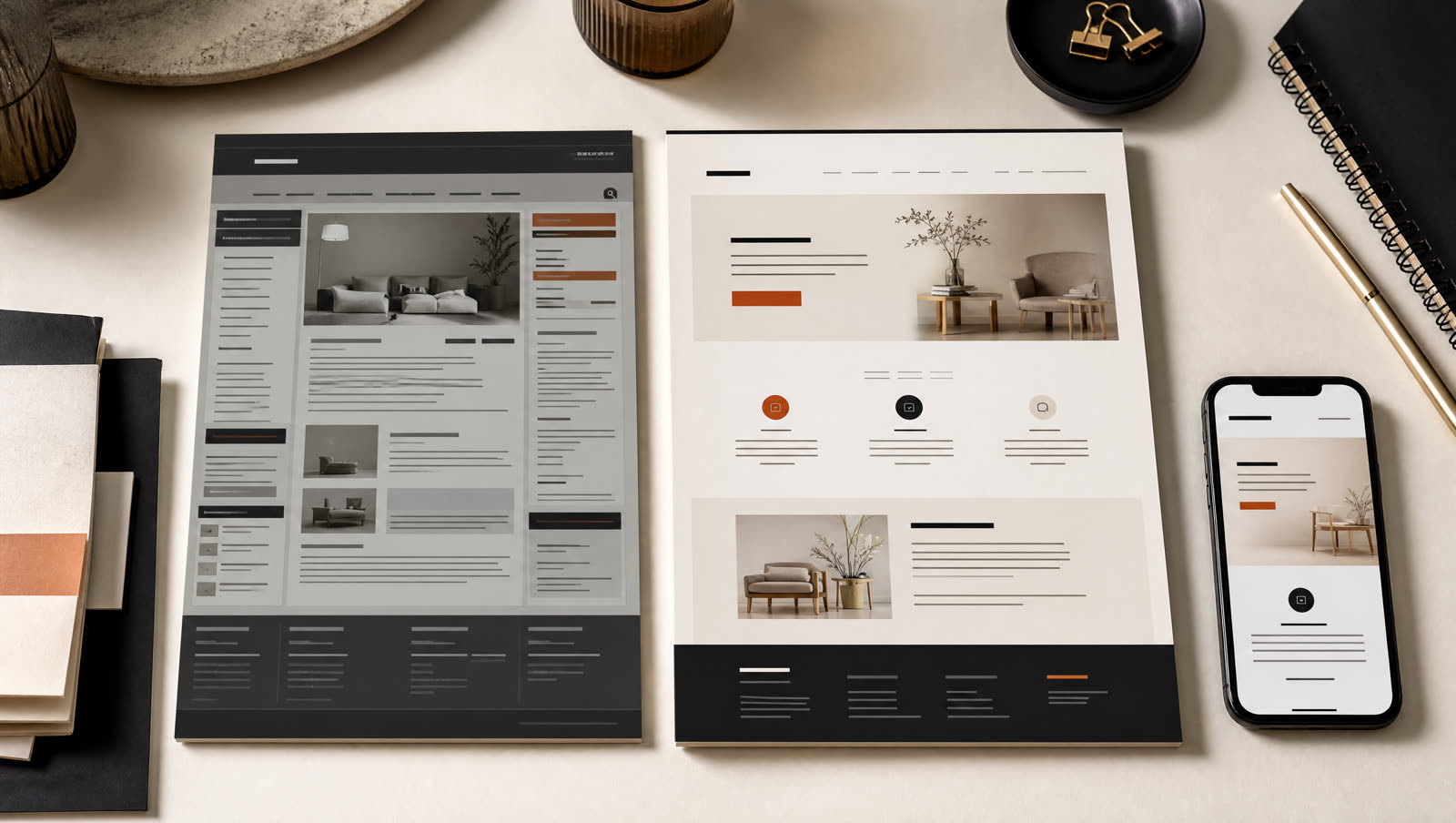
An old website does not always need a redesign. Sometimes it needs a clearer headline, compressed images, a working contact form, or better page titles. Rebuild when the foundation is wrong: poor mobile layout, weak structure, dated copy, slow loading, unclear ownership, and pages that no longer match the business.
The redesign question to ask first
Do not start with "does the site look dated?"
Start with:
Is the current site stopping customers from understanding, trusting, or contacting the business?
If the answer is yes, a redesign might be sensible.
If the answer is no, leave it alone. A site can look unfashionable and still work. Small businesses do not need redesigns for sport.
When a patch is enough
A patch is enough when the site is basically sound but has a clear problem.
Examples:
- The contact form is broken.
- The phone number is not clickable.
- The homepage headline is vague.
- Images are too large.
- The Google Business Profile points to the wrong URL.
- The page title says "Home".
- A service has changed and the copy is out of date.
Those are not redesign projects. They are fixes.
If the current site has a decent structure, loads reasonably well, and is easy to update, patch it before rebuilding it.
When a rebuild makes more sense
A rebuild makes more sense when several things are wrong at once.
The common signs:
- The mobile version is awkward.
- The site is slow.
- The pages are thin.
- The business has changed since the site was written.
- The design hurts trust.
- The contact path is buried.
- The site is locked inside a platform you want to leave.
- The domain, hosting, or analytics are controlled by someone else.
- The site is not getting enquiries and you do not know why.
At that point, patching can become more expensive than rebuilding.
The ownership check
Before paying anyone for a redesign, find out who controls:
- Domain.
- Hosting.
- Website files.
- Email.
- Analytics.
- Google Search Console.
- Google Business Profile.
If you do not control those, the redesign can get stuck before it starts.
This is especially common with old sites built by a previous freelancer, family friend, or agency. The site may be "yours" in conversation, but the login details say otherwise.
Fix access first.
The mobile check
Open the site on your phone.
Try to:
- Read the homepage.
- Tap the menu.
- Submit the form.
- Tap the phone number.
- Find the address.
- Read a service page.
If that feels difficult, the site is failing where most local customers actually use it.
For a tradesman website, mobile contact is often the whole game. For a restaurant or cafe, hours, menu, map, and booking links need to be obvious.
The message check
Old websites often describe the business as it used to be.
Look for:
- Services you no longer sell.
- Missing services you now offer.
- Old prices.
- Old areas covered.
- Old photos.
- Old team or founder copy.
- Vague descriptions that no longer match the work.
If the business has moved on and the site has not, customers feel the mismatch.
The SEO check
An old site often has weak SEO basics.
Check:
- Does each page have a useful title?
- Does the homepage mention the main service and area?
- Are service pages separate?
- Is the sitemap live?
- Is the site indexed?
- Is Google Search Console connected?
- Does the site link to the Google Business Profile?
If local search matters, read local SEO for a small business website. Redesigning the visuals without fixing the search foundation is a half-job.
The enquiry check
If the site is not producing enquiries, work out whether the problem is traffic or conversion.
No traffic means the site may not be showing up. That points to SEO, content, indexing, or local visibility.
Traffic but no enquiries means the page may not be convincing people. That points to clarity, trust, speed, contact flow, or offer.
The article on why a website is not getting enquiries covers that diagnostic in more detail.
What a small business redesign should include
A focused redesign should include:
- Clear page structure.
- Rewritten homepage.
- Updated service pages.
- Mobile-first layout.
- Working contact form.
- Basic technical SEO.
- Sitemap and indexing.
- Analytics or conversion tracking.
- Ownership handover.
That does not always need a large budget. A focused rebuild can fit into website design under £500 if the scope is tight.
My recommendation
If you are unsure, do not start with a quote.
Start with a free website check. I will look at the obvious blockers first: mobile layout, message, speed, contact path, SEO basics, and whether a rebuild is actually needed.
If the site only needs a fix, I will say that. If a rebuild is cleaner, my fixed-price plans start at £250.
FAQ
How do I know if my old website needs a redesign?
Redesign is worth considering if the site is hard to use on mobile, difficult to update, slow, unclear, not getting enquiries, or built around a business that has changed.
Should I redesign or just fix the current site?
Fix it if only one or two things are broken. Rebuild it if the message, mobile layout, structure, SEO, and ownership are all weak.
How often should a small business redesign its website?
There is no fixed rule. A useful site can last years. Redesign when the site no longer reflects the business or stops helping customers enquire.
What should I check before paying for a redesign?
Check mobile layout, page speed, contact forms, search indexing, page titles, ownership, hosting, and whether the current copy still matches the business.
Can a small business redesign be done under £500?
Yes, if the scope is focused. A small rebuild with clear pages, contact flow, mobile design, and basic SEO can fit under £500.